

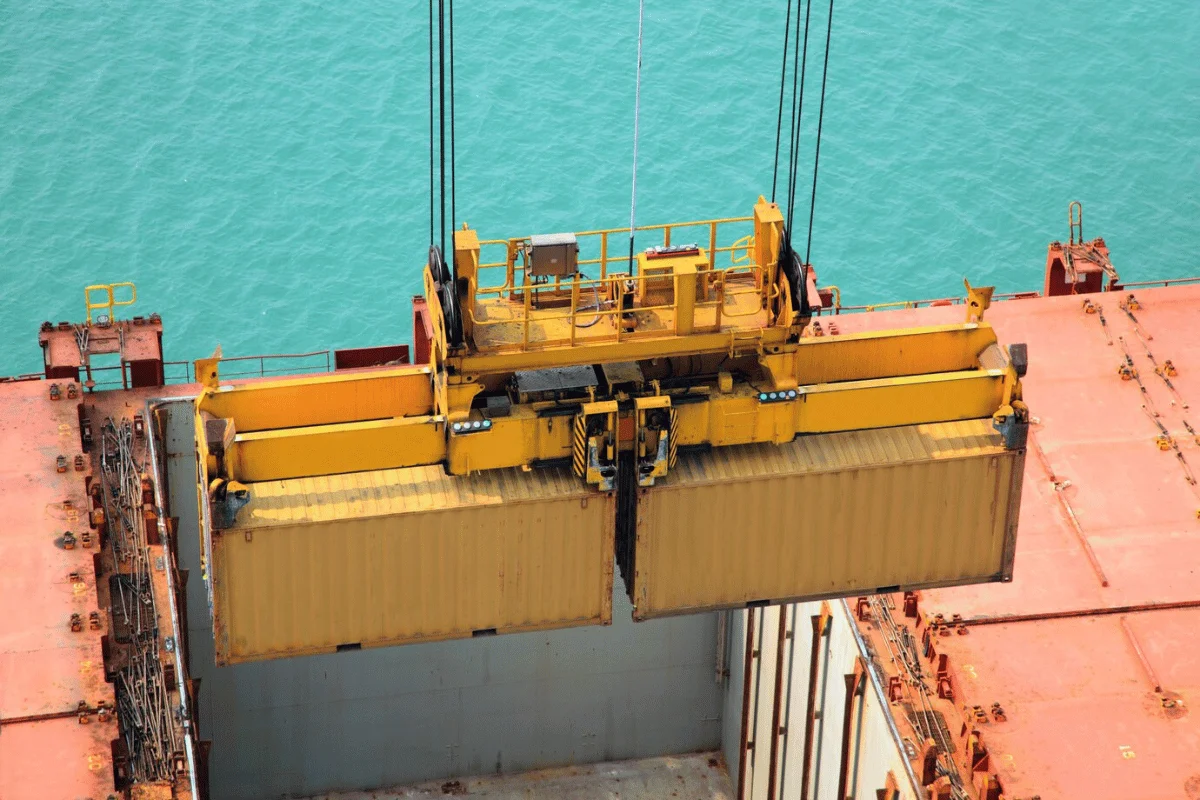

The East Coast of the United States is home to some of the busiest container ports in the world.
The East Coast of the United States is home to some of the busiest container ports in the world. These ports are vital gateways for international trade, linking the U.S.—the world’s largest economy—to global markets. They play a key role in supporting U.S. commerce by facilitating the movement of goods, from consumer products to essential industrial materials.
In this post, we’ll explore the top six East Coast container ports, diving into their unique histories, key statistics, and the essential roles they play in both U.S. and global supply chains. So, whether you’re an importer, a logistics manager seeking new opportunities, or simply curious about these vital transportation hubs, this guide will offer valuable insights.
Port of Miami (PortMiami)
- Location: Biscayne Bay, Miami, Florida
- Size: 520 acres (approx. 2.1 million square meters)
- Depth: 50 feet (15.24 meters)
PortMiami, also known as Dante B. Fascell Port of Miami, stands as one of the United States’ rapidly expanding international trade hubs, significantly boosting both the local and state economies. Each year, it generates over $61 billion for Miami-Dade County, supporting more than 340,000 jobs across Florida.
Strategically positioned at the intersection of major north-south and east-west shipping routes, PortMiami is equipped to handle large vessels, making it a vital link between global markets and U.S. businesses.
From 2022 to 2023, the port handled nearly 1.1 million twenty-foot equivalent units (TEUs), marking the ninth consecutive year it has surpassed the 1 million TEU milestone.
PortMiami is managed by the Miami-Dade County Port Authority and accommodates a diverse variety of cruise ships and international cargo.
History of PortMiami
PortMiami’s history can be traced back to the early 1900s when a man-made shipping channel known as the “Government Cut” was dredged between Fisher Island and Miami Beach.
This led to the creation of what is known as the “Main Channel,” which significantly improved shipping access to what is now Bicentennial Park in downtown Miami. The dredging process also unintentionally formed new islands, including Dodge, Lummus, and Sam’s Island.
PortMiami’s growth, driven by increased shipping access and the expanding South Florida community, led to the approval of joint resolutions in 1960 by the Dade County Board of Commissioners and the City of Miami to build a modern seaport on Dodge Island.
The project involved expanding Dodge Island by connecting it with nearby islands, creating an artificial landmass for the port’s operations.
The port saw its first major dredging in 1993, deepening it to 42 feet ( approximately 13 meters). Subsequent projects included a $40 million South Harbor expansion in 2006, reconnecting the port to the mainland by rail in 2011, and further dredging in 2013 to deepen the harbors to 52 feet.
Port of Charleston
- Location: Charleston, South Carolina
- Size: 201 acres (813,000 square meters)
- Depth (harbor): 52 feet (15.9 meters)
- Depth (entrance channel): 54.2 feet (16.5 meters)
The Port of Charleston is an economic powerhouse in the Southeastern United States. It plays a vital role in supporting regional growth and providing essential connections for businesses involved in international trade, boasting 2.85 million TEUs in Fiscal Year 2022.
The port is operated by the South Carolina Ports Authority (also known as S.C. Ports), which ensures the smooth and efficient flow of cargo between South Carolina and global markets.
Since 2009, the Port of Charleston has doubled its cargo volume, making it the fastest-growing port in the United States. It consistently ranks among the top 10 container ports in the nation, driven by strategic investments and a commitment to efficiency.
With more than $2 billion dedicated to expanding infrastructure, the port has the capacity to handle larger vessels and increasing cargo volumes. A significant milestone was reached in 2021 when Charleston Harbor was deepened to 52 feet, making it the deepest harbor on the East Coast, capable of accommodating the world’s largest ships.
As the port diversifies its cargo base, it continues to attract retailers and e-commerce companies, reinforcing its position as a crucial hub for both national and international trade.
History of the Port of Charleston
The port has been a vital hub for shipping and trade since as far back as 1670, way before the United States was even established. By 1770, Charleston had become the third busiest port in America, with Gadsden’s Wharf as its largest pier.
Ships leaving this waterfront carried goods to Europe, Africa, the Caribbean, and other American ports, exporting items like timber. In return, ships brought imports such as sugar, rum, and luxury goods. By the 1850s, cotton had replaced rice as the city’s primary export.
However, as manufacturing boomed in the Northeast and railroads expanded westward in the mid-1800s, Charleston struggled to keep pace with the nation’s economic growth. The Civil War and its aftermath further delayed the city’s recovery.
Today, the Port of Charleston has reclaimed its status as a major economic force. It is one of the largest container ports on the Southeast and Gulf Coasts, handling millions of 20-foot container units annually. In addition to containers, the port also manages “break bulk” cargo, ranging from heavy equipment to vehicles.
Port of Savannah
- Location: Savannah, Georgia
- Size: 1,345 acres (5,443,026.7 square meters)
- Depth: 47 feet (14.33 meters)
The Port of Savannah operates the largest single container terminal in the Western Hemisphere, managed by the Georgia Ports Authority (GPA). For an idea of its size, the port handled 5.4 million TEUs in FY2023, a 6.7% drop from the previous year’s record. It accounted for 22.1% of East Coast container trade and 12.3% of all U.S. containerized exports.
The port boasts the most global container services among Southeast and Gulf ports, with transit times as short as 23 days from Asia and 11 days from Europe. It also features the largest single-terminal container facility in the U.S., along with a nearly 10,000-foot dock.
Strategically located with immediate access to I-95 and I-16, the port has extensive on-site inspection offices for federal agencies and hosts the largest concentration of retail import distribution centers on the East Coast.
The GPA manages two deepwater terminals in Savannah: Garden City Terminal, which features a 500-foot-wide channel and a 1,500-acre secured container facility, and Ocean Terminal, a 200.8-acre general cargo terminal that handles RoRo, breakbulk, containers, and heavy-lift cargo.
History of Georgia Ports Authority
The Georgia Ports Authority (GPA) was established by the Georgia General Assembly in 1945 as a quasi-state entity governed by a board appointed by the governor. The GPA owns and operates four deepwater terminals at the Ports of Savannah and Brunswick, linking the state’s economy to global markets. It also leases a fifth terminal in Brunswick for bulk cargo operations.
The GPA supports over 400,000 jobs statewide, meaning that one in every 11 jobs in Georgia is connected to the ports. Today, the port is one of the fastest-growing and busiest container gateways in America.
Port of New York and New Jersey
- Location: New York, New York
- Size: 3,000 acres (12,140,569 square meters)
- Depth: 50 feet (approximately 15 meters)
The Port Authority of New York and New Jersey plays a crucial role in driving the economy of the nation’s largest metropolitan region. It moved over 7.8 million TEUs of cargo in 2023.
Established in 1921 through a bi-state agreement, it is one of the oldest and most diverse public authorities in the U.S., overseeing a wide array of assets and managing significant passenger and cargo volumes throughout the New York / New Jersey Port District.
It is the largest containerized cargo port on the East Coast and the third-largest in North America, serving a population of over 27 million people. In addition to its main port facilities, the region hosts various privately owned terminals, cargo handling areas, cruise terminals, ferry landings, and vessel support services such as marine fueling and tug assistance.
As the first U.S. public transportation agency to adopt the Paris Climate Agreement, the Port Authority is aiming to reduce greenhouse gas emissions by 80% by 2050. This commitment includes transitioning to low- and zero-emission operations across its terminals, electrifying port vehicles and equipment, and launching pilot programs to further explore hybrid and electric solutions for container handling.
Spanning over 3,000 acres, the Port Authority’s key facilities include:
- Port Newark (P.N.)
- Port Jersey-Port Authority Marine Terminal (Port Jersey PAMT)
- Elizabeth-Port Authority Marine Terminal (Elizabeth PAMT)
- Brooklyn-Port Authority Marine Terminal (Brooklyn PAMT)
- Howland Hook Marine Terminal (Howland Hook MT)
History of the Port of New York and New Jersey
The New York and New Jersey region has a long maritime history, with its growth driven by the seaport’s vital role in cargo and passenger movement. Since the first pier was built in 1659, the Port of New York and New Jersey became a key hub for trade.
By 1770, New York was a major exporter, shipping wheat to Europe and the West Indies. Following the American Revolution, it ranked fourth in cargo tonnage and quickly became a marketplace for goods like cotton.
The 1825 opening of the Erie Canal transformed the port into a national economic powerhouse. By 1870, New York Harbor was the busiest in the Western Hemisphere. The need for deeper channels led to the dredging of the Ambrose Channel to 40 feet in 1899, with further deepening to 45 feet in 1935. Today, the Ambrose Channel has been deepened to 53 feet, with the main channels across the harbor reaching 50 feet to accommodate larger modern vessels.
The port includes marine facilities in Manhattan, Brooklyn, Staten Island, and northern New Jersey, supporting a vast network of brokers, freight forwarders, financiers, and other key players in the maritime industry.
Port of Virginia
- Location: Norfolk, Virginia
- Size: 1,864 acres (7,543,340 square meters)
- Depth: 50 feet (about 15 meters)
The Port of Virginia is a key driver of economic growth for the region, anchored by the world’s largest natural deepwater harbor. As one of the largest container ports on the East Coast, it facilitates more than just cargo shipments – it generates investment, creates jobs, and connects Virginia to global markets.
The Port of Virginia operates six cargo terminals, including state-of-the-art facilities like Norfolk International Terminals and Virginia International Gateway, one of the most advanced ports in the Western Hemisphere. Together, these terminals efficiently move goods via rail, barge, and truck, serving as a critical hub for imports and exports.
In 2019, the port completed a $750 million expansion, boosting cargo capacity by 46%. It remains a growing economic powerhouse, contributing billions in revenue and supporting hundreds of thousands of jobs across the state. In FY23, cargo was moved primarily by truck (59%), rail (36%), and barge (5%).
Operated by the Virginia Port Authority, the port features 50-foot deep, obstruction-free channels – the deepest on the East Coast – capable of handling the largest vessels and direct connections to over 45 countries.
With efficient on-dock rail links to inland markets and two-thirds of the U.S. population within a day’s drive, the port is well-positioned for growth. It also leads in environmental management and offers tax incentives to businesses.
History of the Port of Virginia
The history of maritime activity in the Virginia region stretches back centuries, as its location played a major role in wars as well as peacetimes. The modern operations of the Port of Virginia, however, began in 1952 when the Commonwealth of Virginia established the Virginia Port Authority to manage and develop the state’s ports.
In 1981, the port made history by becoming the first in the United States to consolidate all cargo operations under one private operating company. This move helped streamline operations and increase efficiency, marking the port as a leader in innovation and modernization in the shipping industry.
Port of Baltimore
- Location: Baltimore City, Maryland
- Depth (main channel): 51 feet (15.5 meters)
The Port of Baltimore boasts the deepest harbor in Maryland’s Chesapeake Bay and is strategically positioned closer to the Midwest than any other East Coast port. Located in Baltimore City, it lies only a few hours away from roughly one-third of the U.S. population.
In terms of economic impact, the Port of Baltimore is a powerhouse for Maryland. It contributes nearly $3.3 billion in personal income and supports approximately 15,330 direct jobs, along with 139,180 jobs related to port activities. It also generates over $395 million in taxes and $2.6 billion in business income.
The port accommodates more than 50 ocean carriers, facilitating nearly 1,800 visits each year. In 2023, the port handled a record 1.1 million TEU containers.
Despite not being the largest in the U.S., the Port of Baltimore plays a crucial role on the East Coast, handling significant exports such as automobiles and coal.
History of the Port of Baltimore
The Port of Baltimore began in the 17th century as a key point for Maryland’s tobacco trade with England. Over time, the port expanded to accommodate other commodities, including trade with China by the late 18th century. In 1706, the Maryland General Assembly officially designated Baltimore as a port of entry. Fells Point, the deepest part of the harbor, quickly became a major shipbuilding center. By 1773, Fells Point was incorporated into Baltimore City, and it gained renown for constructing Baltimore clippers, fast ships used for trade and privateering.
During the Revolutionary War, the port played a vital role in trade with the West Indies. An earthwork fort called Fort Whetstone was built in 1776 to defend the port, later replaced by Fort McHenry in 1794, which became famous during the War of 1812. The port continued to grow through the 19th century with the expansion of the railroad, allowing Baltimore to trade with Europe and South America.
Ship4wd: Your Trusted Partner for International Shipping
Deciding on the best port of entry is a critical step in developing a successful shipment management strategy. Once you’ve selected a port that aligns with your shipping needs, it’s equally important to ensure your logistics operations run smoothly from start to finish. This is where Ship4wd stands out. We offer digital freight forwarding solutions tailored for business owners and logistics managers, making the shipping process simpler and more efficient.
Ship4wd provides a comprehensive freight shipping platform that allows you to easily obtain shipping quotes and book both air freight and ocean freight services, including Full Container Load (FCL) or Less than Container Load (LCL) options.
Additionally, we provide cargo insurance to protect your goods and pre-shipment inspections to ensure your cargo is inspected before it leaves your supplier’s facility.
Our platform also simplifies customs clearance by managing the necessary paperwork and compliance processes. After your goods have cleared customs, we will handle the final delivery and make sure that your cargo gets to its destination safely and on time.
Additionally, our dedicated 24/7 support team is available to assist you in tracking your shipments, answering questions, and navigating our platform.
Join Ship4wd today and discover how we can help you optimize your shipping logistics.