

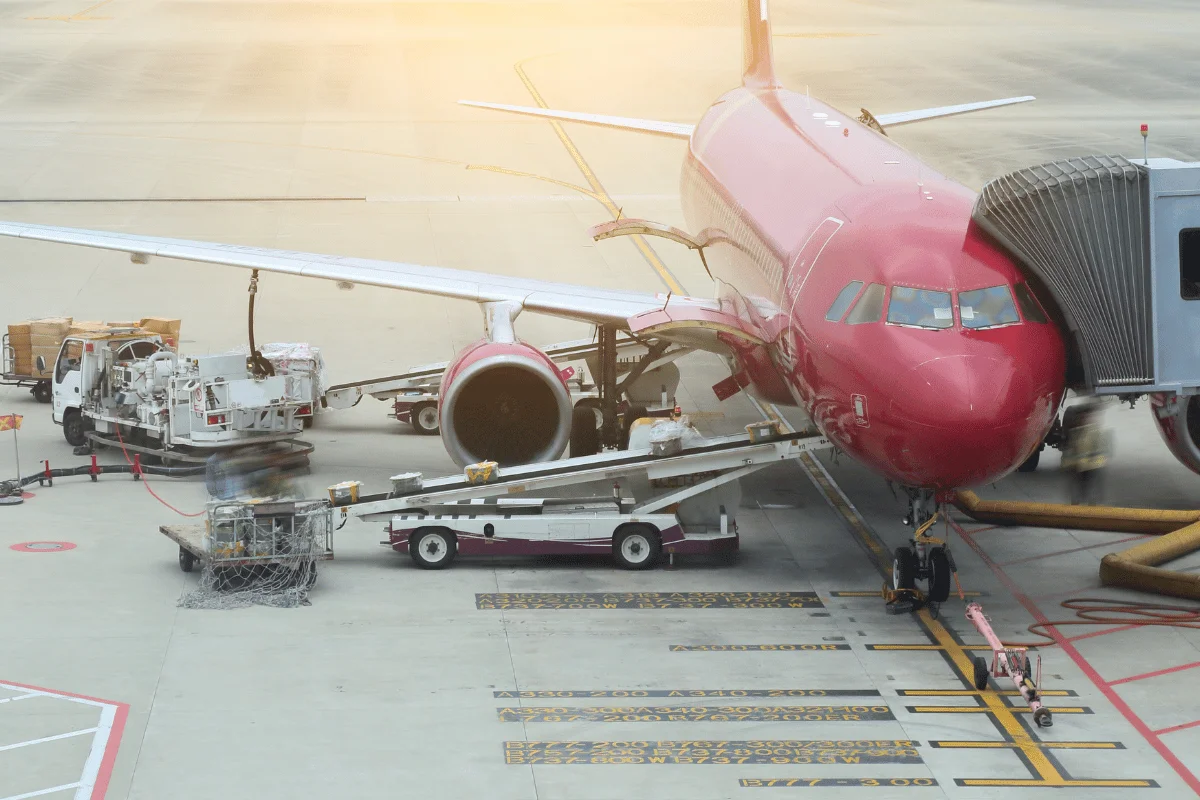

Discover how to find the best shipping company for your China to USA trade and avoid costly delays.
Shipping from China to the USA is the world’s most active trade lane. American SMBs rely on it for consumer goods, electronics, furniture, apparel, machinery, and hundreds of other product categories. China remains the US’s second-largest import source, accounting for close to $430 billion in annual import value.
Getting goods across the Pacific has never been straightforward, but 2025 and early 2026 have added significant new complexity. Tariff policy shifted repeatedly, the de minimis exemption for low-value Chinese shipments was eliminated, and the trade relationship between the two countries moved through escalation, truce, and renewed legal challenges. If you are still working from a shipping cost model built before 2025, it needs updating.
This guide covers the three shipping methods available for China-to-USA imports, current cost benchmarks and transit times, the documentation you need, the tariff situation as it stands in 2026, and how Ship4wd helps SMBs manage the complexity from a single platform.
Shipping Methods from China to the USA
Three primary methods move commercial cargo from China to the US: ocean freight, air freight, and express courier. Each serves a different volume and urgency profile.
Ocean Freight (FCL and LCL)
Ocean freight is the standard method for commercial-volume imports. It splits into two container options. Full Container Load (FCL) gives your cargo an entire container, 20ft or 40ft, sealed from origin to destination. It is the better choice for shipments above roughly 15 CBM, and it offers faster customs clearance, lower damage risk from reduced handling, and predictable transit times.
Less-than-Container Load (LCL) consolidates your cargo with other shippers’ goods in a shared container. You pay only for the space your shipment occupies, which makes it cost-effective for smaller volumes. The trade-off is slightly longer transit times due to consolidation and deconsolidation handling at each end, and a higher risk that another shipper’s documentation issue delays the whole container.
Current ocean freight benchmarks for 2025 into early 2026: a 20ft FCL container from Shanghai to Los Angeles runs roughly $2,500 to $3,500 on the spot market; a 40ft container runs $3,500 to $6,000. LCL rates run approximately $50 to $80 per CBM to the West Coast. Both figures fluctuate with peak season demand, fuel prices, and carrier surcharges.
Air Freight
Air freight is the right choice when speed matters more than cost per kilogram. Standard air freight from China typically arrives within 3 to 7 days port-to-port. Door-to-door adds a few days for pickup, export handling, and last-mile delivery, putting the practical range at 5 to 11 days for most commercial shipments. Ship4wd’s air freight service covers urgent and time-sensitive imports with the same instant quoting and real-time tracking available on ocean bookings.
Air freight costs roughly $5 to $8 per kilogram for standard cargo in 2025. Fuel surcharges, which carriers adjust weekly or monthly, can add 18% to 28% on top of the base rate. For anything above a few hundred kilograms, the cost difference versus ocean freight becomes very significant, and ocean freight is typically the better choice unless the delivery timeline genuinely cannot wait.
Express Courier
Express services from DHL, UPS, and FedEx bundle transport, customs clearance, and last-mile delivery into a single door-to-door service. Transit runs 1 to 5 days. This makes express courier the fastest and simplest option for samples, small reorders, and urgent parts, and it works well for shipments under roughly 150 kg where the per-kg premium is justified by the convenience and speed.
Express couriers handle their own customs filing and act as both carrier and broker. For small commercial shipments, this removes the need to arrange separate customs clearance. The caveat is cost: express rates per kilogram are significantly higher than both air freight and ocean freight, and they are not practical for commercial-volume imports.
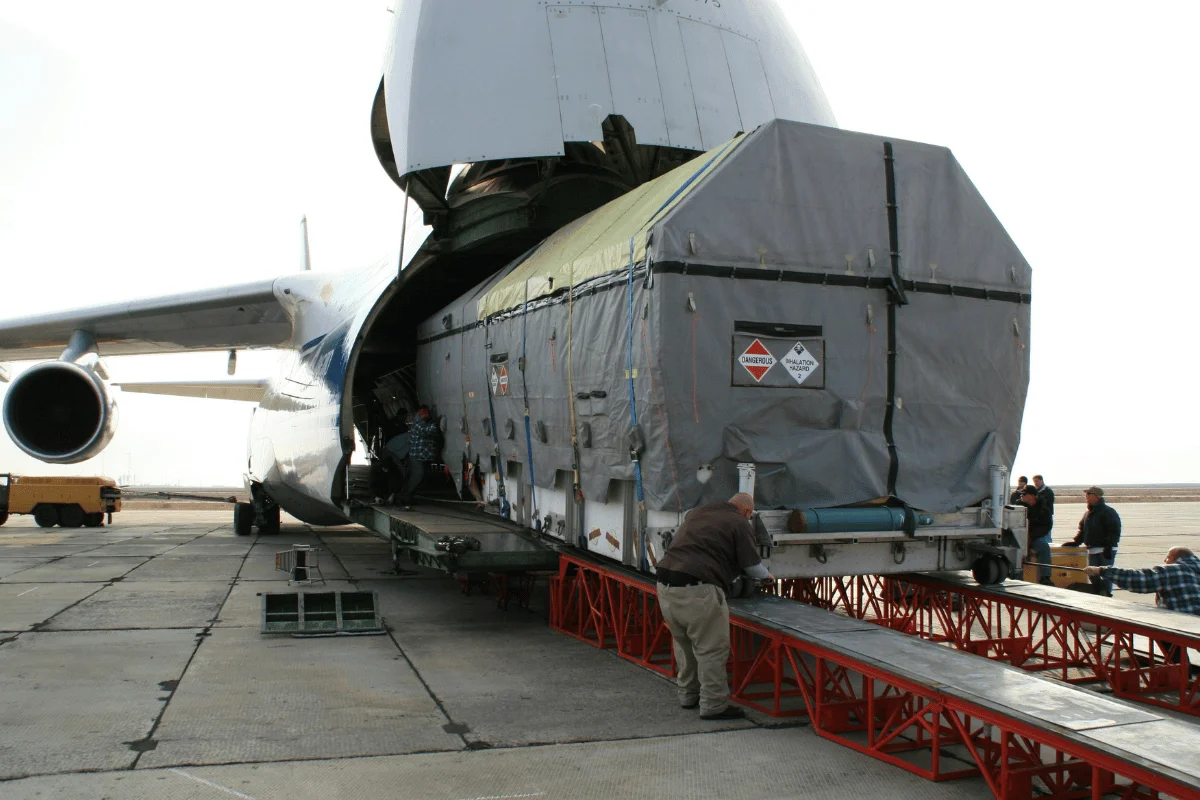
China to USA Shipping Times
Transit times depend on your shipping method, your origin port in China, your destination port in the US, and whether you are booking port-to-port or door-to-door.
Ocean Freight Transit Times
West Coast ports including Los Angeles and Long Beach are the fastest ocean destination from China, with typical transit times of 15 to 20 days from Shanghai. East Coast ports such as New York, Savannah, and Baltimore run 25 to 35 days, adding Panama Canal transit time. Gulf Coast ports like Houston sit around 25 to 30 days.
LCL shipments add time at both ends for consolidation at origin and deconsolidation at destination. Budget an additional 3 to 7 days on top of the ocean transit time. Port congestion at Los Angeles and Long Beach, which averaged 4 to 6 days dwell time in 2026, can push totals higher during peak season.
Air Freight Transit Times
Standard air freight arrives within 3 to 7 business days port-to-port from major Chinese airports (Shanghai Pudong, Beijing, Guangzhou, Shenzhen) to US gateways including LAX, JFK, and ORD. Door-to-door adds collection at origin and a delivery to business address or warehouse, putting the practical range at 5 to 11 days total.
Peak Season and When to Book
Two periods push up rates and extend transit times every year. The summer-to-early-fall peak, roughly July through October, sees importers stocking US inventory for the holiday retail season. This is when container space tightens, Peak Season Surcharges (PSS) of $300 to $600 per container appear, and spot rates jump. The pre-Chinese New Year rush, typically January, drives a second surge as suppliers ship before factory shutdowns.
Booking ahead is the most effective way to avoid peak season rate spikes. Ship4wd locks FCL pricing and container allocation up to 45 days in advance, which gives SMBs planning certainty that spot market booking cannot provide. You can compare live quotes and lock your rate without committing to volume contracts.

Cost of Shipping from China to the USA
Freight rates are only part of your landed cost. The full cost of importing from China includes the freight rate itself, port charges and destination handling, customs clearance fees, your customs bond, import duties and tariffs, and inland delivery to your warehouse or fulfillment center.
Freight Rate Benchmarks
These figures reflect 2025 market averages. Rates change with season, fuel costs, and carrier capacity, so treat them as planning benchmarks rather than fixed prices.
Ocean FCL: $2,500 to $3,500 for a 20ft container to the West Coast; $3,500 to $6,000 for a 40ft container. East Coast adds $500 to $1,000 to both figures. Ocean LCL: approximately $50 to $80 per CBM to the West Coast. Air freight: $5 to $8 per kg base rate, plus fuel and peak surcharges. For a current rate on your specific route and cargo, get an instant quote on Ship4wd without creating an account.
Customs Duties and the 2026 Tariff Situation
The tariff environment for Chinese imports has changed substantially since 2025 and continues to evolve. As of March 2026, the key layers are:
Section 301 tariffs remain in force on most Chinese goods, adding 25% duty across a wide range of product categories including electronics, furniture, machinery, and textiles. These have been in place since 2018 and were not affected by the February 2026 Supreme Court ruling on IEEPA tariffs.
IEEPA tariffs (the fentanyl-related 20% levy and reciprocal tariffs) were struck down by the US Supreme Court on February 20, 2026, and ceased collection on February 24, 2026. The Trump administration responded immediately with a new 10% global tariff imposed under Section 122 of the Trade Expansion Act, effective from the same date. New Section 301 investigations targeting China were launched in March 2026, which could result in additional duties later in 2026.
The practical result for most SMBs importing Chinese goods in March 2026: Section 301 duties still apply to their product category, and the new 10% Section 122 tariff stacks on top of those. Use Ship4wd’s free Import Duty Calculator to estimate your current duty obligation before you book, and factor total landed cost, not just the freight rate, into your pricing.
The End of De Minimis for Chinese Goods
The $800 de minimis exemption that allowed low-value parcels from China to enter the US duty-free was eliminated on May 2, 2025. Every commercial parcel from China, regardless of value, is now subject to import duties. This change significantly affects e-commerce importers who previously shipped small volumes of goods directly to US consumers without customs liability. If your supply chain relied on de minimis clearance, you need to account for duties and customs broker fees on every shipment.

Documentation Required for Shipping from China to the USA
Every commercial shipment from China to the US requires a specific set of documents. Missing or inaccurate paperwork is the most common cause of customs delays, cargo detention, and penalty fees.
Core Documents
The commercial invoice must match the packing list exactly, with accurate declared values, product descriptions, quantities, and country of origin. The packing list details the physical contents, dimensions, and weight of each package. The Bill of Lading (for ocean freight) or Air Waybill (for air freight) is the carrier’s receipt and the title document for your goods. All three must be consistent with each other.
ISF Filing
The Importer Security Filing (ISF), also called the 10+2 filing, must be submitted to US Customs and Border Protection at least 24 hours before your cargo loads onto the vessel in China. Missing the ISF filing carries a $5,000 per violation penalty. Ship4wd handles ISF submission digitally as part of the customs clearance service, with proactive reminders and document checks before your vessel departure date.
Customs Bond
A customs bond is required for commercial imports into the US. A single-entry bond covers one shipment; a continuous bond covers all imports within a 12-month period and is more cost-effective for businesses importing regularly. Ship4wd offers both options through its customs clearance service, so you can arrange your bond in the same booking flow as your freight.
Additional Certificates
Depending on your product category, additional documentation may be required. Food and beverage imports need FDA Prior Notice and may require FSVP compliance. Electronics may need FCC authorization. Goods containing materials from Xinjiang may face enhanced scrutiny under the Uyghur Forced Labor Prevention Act (UFLPA) and require supply chain documentation. Lithium batteries require IATA DG certification for air shipments. Your freight forwarder should flag product-specific requirements before your shipment moves.

Key Shipping Routes from China to the USA
Origin port choice in China and destination port in the US both affect transit time and cost.
The main Chinese export ports are Shanghai (the world’s busiest container port), Ningbo-Zhoushan, Shenzhen, Guangzhou, and Qingdao. Most SMBs sourcing from manufacturers in Guangdong province will load at Shenzhen or Guangzhou. Manufacturers in the Yangtze River Delta region typically load at Shanghai or Ningbo.
West Coast US ports, primarily Los Angeles and Long Beach, handle roughly 70% of China-origin container traffic and offer the shortest Pacific transit times. East Coast ports including New York/New Jersey, Savannah, and Baltimore add 10 to 15 days to the voyage but can reduce inland trucking costs significantly if your final destination is in the eastern US. The Gulf Coast port of Houston offers good rail and road connectivity for the central and southern US with lower congestion than West Coast alternatives.
How Ship4wd Simplifies China-to-USA Shipping for SMBs
Ship4wd is a digital freight forwarding platform built specifically for small and medium-sized businesses importing into the US and Canada. The platform combines instant quotes, container allocation, digital customs clearance, cargo insurance, and 24/7 live support into a single interface, removing the need to coordinate multiple providers for each shipment.
For FCL and LCL ocean freight from China, Ship4wd offers guaranteed container allocation even during peak season, which matters when spot market space becomes limited. FCL pricing locks up to 45 days ahead so you can plan inventory purchases without exposure to rate spikes. LCL allocation locks up to 14 days ahead.
Customs clearance is handled digitally. You upload your documents through the platform, Ship4wd checks them proactively before your cargo loads, and ISF filing and Power of Attorney are signed electronically. The built-in duty estimator gives you your landed cost before you confirm the booking, so there are no surprises at port. Cargo insurance is available from $20 per shipment with coverage up to $2 million. If you import regularly, Ship4wd also offers pay-after-cargo-arrival credit lines for eligible businesses, giving you up to 90 days from delivery to pay for your shipment.
Ship4wd is powered by ZIM, a top 10 global ocean carrier with 80 years of experience, and holds FMC registration (No. 029468) as a licensed ocean freight intermediary. You can get a quote and book your next China-to-USA shipment in minutes.
Frequently Asked Questions (FAQs)
Here are some common questions that we receive from our customers:
Ocean freight is consistently the most cost-effective method for commercial volumes. FCL is cheapest per unit for large shipments above 15 CBM; LCL is more economical for smaller volumes where paying for a full container is not justified. Air freight and express courier cost significantly more per kilogram and are only worth it when delivery speed is the priority.
Ocean freight to West Coast ports takes 15 to 20 days from Shanghai; East Coast ports take 25 to 35 days. Air freight runs 3 to 7 days port-to-port, or 5 to 11 days door-to-door. Express courier delivers in 1 to 5 days. All figures can extend during peak season or due to port congestion.
Section 301 tariffs remain in force on most Chinese goods, with rates of 25% on a wide range of categories. A new 10% global tariff under Section 122 is in effect as of February 24, 2026, stacking on top of Section 301 duties. New Section 301 investigations launched in March 2026 could add further duties later in the year. Use the Ship4wd duty calculator to estimate your specific product’s current liability before booking.
Hiring a licensed customs broker is not legally required, but it is strongly recommended for most commercial imports. Customs entry errors are the most common source of delays, detention fees, and penalties. A digital freight forwarder like Ship4wd includes customs clearance in their service, covering ISF filing, document review, duty calculation, and entry submission.
The $800 de minimis threshold that allowed low-value parcels from China to enter the US duty-free was eliminated on May 2, 2025. All Chinese imports are now subject to duties regardless of declared value. E-commerce businesses that relied on direct-from-China small parcel shipping without customs liability need to factor duties into their cost models.
Compare multiple carriers and routes rather than accepting the first quote you receive. Book ahead of peak season to lock in lower rates before demand-driven surcharges appear. Ship4wd offers instant quote comparison across carriers with transparent all-in pricing. Create a free account to access live rates for your China-to-USA route.