

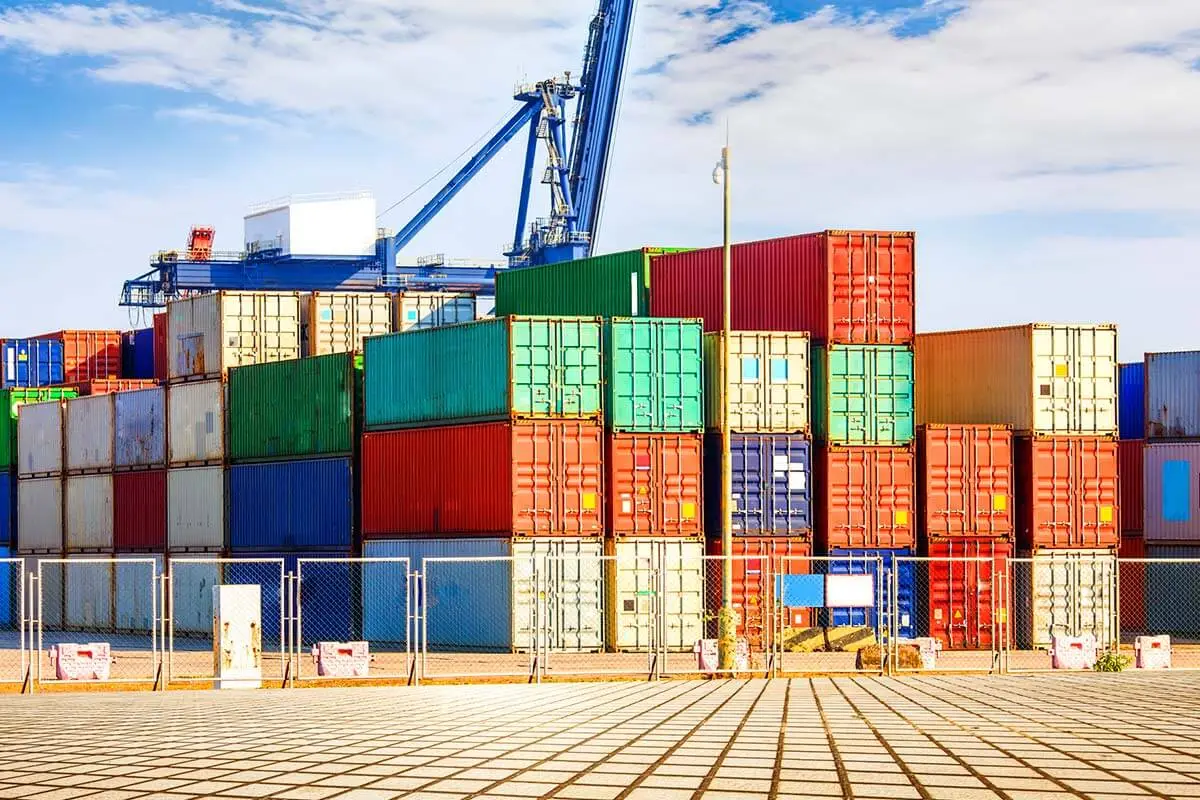

How big are shipping containers? Read on to find out container sizes in feet and meters.
Shipping containers come in standardized sizes to ensure safe, efficient transport across the globe. Understanding their exact dimensions helps importers and exporters plan shipments, optimize space, and avoid costly surprises.
Quick Overview (TL;DR)
Standard container dimensions:
- Most shipping containers are 20ft or 40ft long, 8ft wide, and 8’6” tall (with High Cube containers reaching 9’6”).
Interior vs exterior space:
- Internal space is slightly smaller due to wall thickness and door rails — usually 2–8 inches less in each dimension.
Volume capacity:
- 20ft container ≈ 1,170–1,320 cubic ft
- 40ft container ≈ 2,390–2,695 cubic ft
- Small containers (6ft–10ft): Not accepted for ocean freight; best suited for storage or local transport. SMBs with small shipments should opt for LCL (Less than Container Load) options.
For SMB importers: Ship4wd provides guaranteed container allocation, competitive FCL/LCL pricing, real-time tracking, and 24/7 support—making international shipping seamless and cost-effective.
Shipping Container Dimensions By Type
Standard shipping container sizes range from 20 feet to 40 feet in length. They are 8 feet 6 inches tall, and the high cube type is 9,6”. However, the width is always the same – 8 feet.
Internal Dimensions Of Shipping Containers
Knowing the available space within a container is crucial for better cargo management, where every inch matters! Internal dimensions depend on the thickness and corrugation depth of the side walls and roof, door and floor thickness, and underside clearance.
For example, the interior width of a shipping container is usually 2 inches less than the outside, the length is 3 inches narrower, and the height is 8 inches shorter than the external dimensions.
In reefers (refrigerated containers), insulation material and cooling devices may reduce the available space for your load even more.
Container Doors
The height of a shipping container door is a few inches shorter than the roof due to a steel top rail set above the door for structural integrity.
The door exteriors also have clear indications of the tare weight, gross weight, and payload weight of the sea container.
Common Shipping Container Sizes Snapshot
Though weights and dimensions can vary for every manufacturer, the table below shows indicative shipping container sizes in feet, so you can have a unified view of what’s available for your shipment.
| Container dimensions by type (LxWxH) | 20ft High-Cube(20’ x 8’ x 8’6”) | 20ft High-Cube (20’ x 8’ x 9’6”) | 40ft Standard Dry (40′ x 8′ x 8’6″) | 40ft High Cube (40′ x 8′ x 9’6″) |
| Interior Dimensions (LxWxH) | 19’3″ x 7’8″ x 7’10” | 19’3″ x 7’8″ x 8’10” | 39’5″ x 7’8″x 7’10” | 39’5″ x 7’8″x 8’10” |
| Door Opening (WxH) | 7’8″ x 7’5″ | 7’8″ x 8’5.5″ | 7’8″ x 7’5″ | 7’8″ x 8’5.5″ |
| Square Footage | 150 ft² | 150 ft² | 300 ft² | 300 ft² |
| Average Tare Weight (Empty) | 5,070 lb | 5,500 lb | 8,000 Ib | 8,500 lb |
How Many Cubic Feet Do Shipping Containers Have?
Here are some average volume (capacity) measurements for standard cargo containers:
- 20-Foot: 1,170 cubic feet
- 20ft High Cube: 1,320 cubic feet
- 40-Foot: 2,390 cubic feet
- 40ft High Cube: 2,695 cubic feet
Note that the exterior cubic footage of containers is approx. 200-300 ft³ bigger than its interiors.
Knowing the volume, i.e., the capacity of your cargo containers, ensures secure and cost-effective transportation. It helps maximize space utilization which in turn minimizes the number of containers needed, along with all expenses associated with handling and logistics.
Are There Any Smaller Container Sizes Used For Ocean Freight?
Small containers, such as 10ft containers or even smaller versions of 8ft and 6ft, are used for storage, non-commercial transport, pop-up stores, etc. But they are not an option for ocean freight.
In fact, shipping lines will not board 10-foot containers, even if you have a relatively small shipment. The truth is that freight costs and charges and the time for handling and loading 10ft are the same as for 20-footers.
But also the handling equipment at port terminals is not suitable for their processing.
As the U.S. Port Performance Freight Report states, “the number and size of cranes affect the number and size of container vessels a terminal can service simultaneously and, thus, is a proxy for port capacity.”
That said, if you have small volumes to ship overseas, consider consolidating your freight in an LCL (Less than Container Load) shipment.
Cost-Effective Options For FCL & LCL Shipments
If you’re a small-medium business owner looking for the best solution to ship abroad, check out Ship4wd’s competitive pricing for Full Container (FCL) and Less than Container Load.
Our cutting-edge freight forwarding options include port-to-port and door-to-door delivery, as well as a smart dashboard for tracking and managing all your international shipping operations.
With guaranteed container allocation and 24/7 live support, Ship4wd is the best choice for SMBs that want to stay competitive in the global market. Get started today!
Frequently Asked Questions (FAQs)
If you are shipping to countries using the metric system, it’s worth knowing the sizes of shipping containers in meters. Here are some basic measurements to help you skip the calculator.
The most common container sizes are 20ft (TEU) and 40ft (FEU), both 8ft wide and 8’6” high. High Cube containers add an extra foot of height for more capacity, ideal for bulky goods or high-volume cargo.
A 20ft container holds about 1,170–1,320 cubic feet of cargo, while a 40ft container can carry 2,390–2,695 cubic feet. Actual usable space may vary slightly due to insulation or wall thickness.
Exterior dimensions refer to the outside measurement of the container, while interior dimensions represent usable space. Interior measurements are typically a few inches smaller because of corrugated steel walls, floors, and door frames.
No. Containers under 20ft aren’t accepted for ocean freight because port cranes and equipment are standardized for 20ft and 40ft units. For small shipments, LCL shipping (Less than Container Load) is a more cost-effective and accepted alternative.
A High Cube container is one foot taller than a standard unit (9’6” vs. 8’6”), offering roughly 12% more volume. They’re ideal for lightweight but bulky goods like textiles, furniture, or machinery.
If your cargo fills most of a 20ft or 40ft container, FCL (Full Container Load) is often cheaper and safer. For smaller loads, LCL (Less than Container Load) lets you share space and cost with others. Ship4wd helps you compare both instantly through its digital platform.
Ship4wd’s AI-powered platform and 24/7 expert support simplify the process—providing instant quotes, guaranteed space, and real-time tracking for both FCL and LCL shipments. You can book, manage, and monitor all your freight operations digitally.