

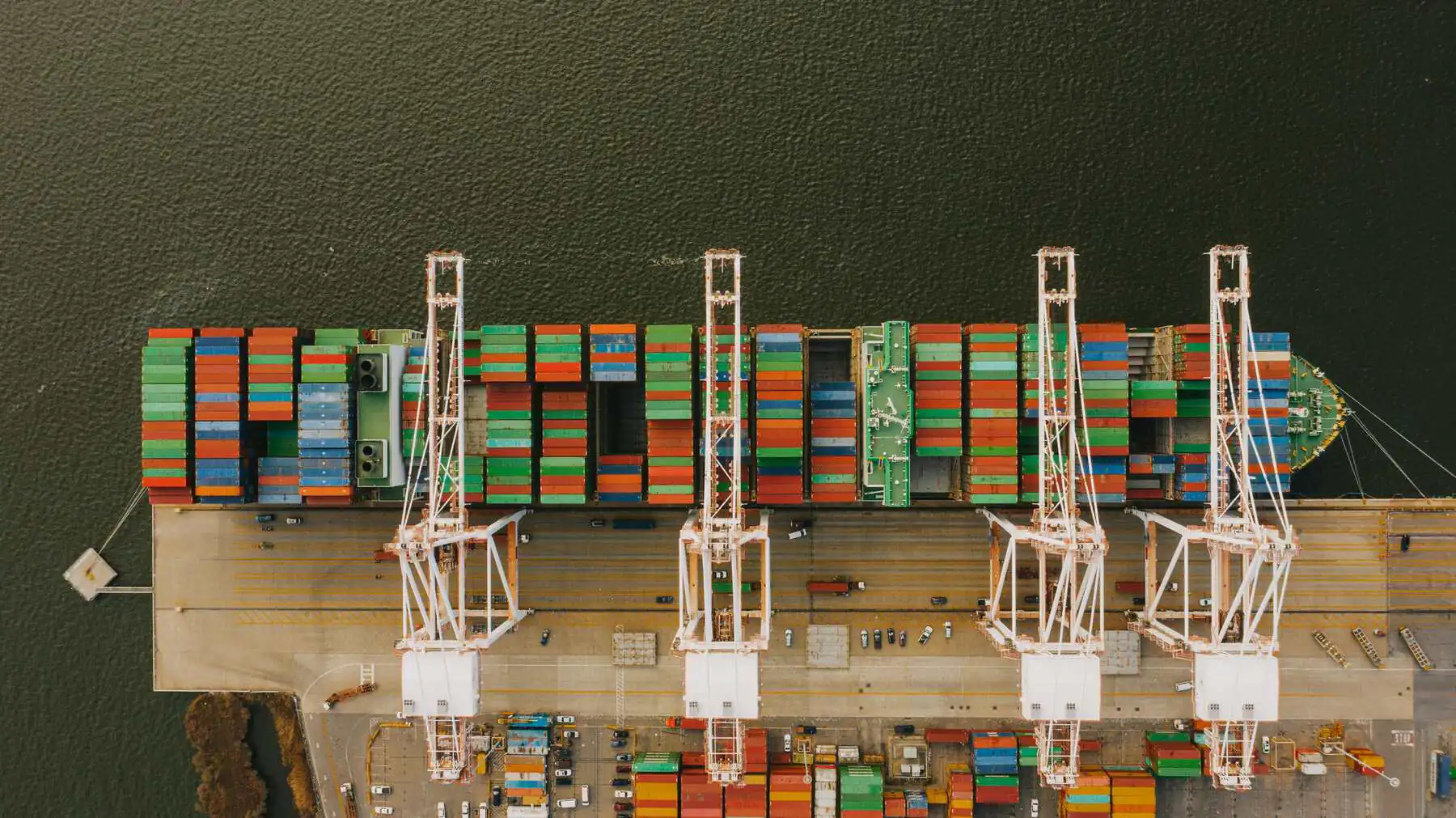

When shipping goods across borders, freight costs are determined based on many different factors. Not only that but various fees are added along the way. Read on to find out how they can affect your shipping budget.
Air cargo and ocean freight rates are never a flat price. In international shipping, a complex interplay of capacity, demand, world events, planning, terminal infrastructure, and numerous other factors shapes the price shippers pay to transport their cargo.
Understanding these nuances will help you better manage your budget and optimize your shipping strategies.
What Are Freight Charges?
Freight charges are the costs shippers pay for transporting their goods from one place to another, via air, ocean, rail, or highway. Freight charges vary based on the mode of transportation, the route, demand fluctuations, cargo type, and many other factors.
What Are Freight Fees?
Freight fees are additional costs that are added to the actual freight charge for transporting a shipment from origin to destination. They can refer to handling, fuel price increases, chassis fees, local taxes, demurrage, special equipment needed, etc.
Even though the terms freight charges and freight fees are often used interchangeably, the latter denotes additional, sometimes unexpected, costs.
Factors Influencing Freight Charges
The most common factors that influence freight charges include:
- Weight & Volume: As expected, the larger the load, the higher the costs. Air freight costs are often calculated based on their actual weight or their volumetric weight – whichever is higher.
- Distance, Route & Port Location: Longer distances or remote locations naturally lead to increased transportation costs. They demand more fuel, labor, and vessel maintenance. Shipping to remote locations or smaller ports is also more expensive than popular shipping lanes and large, commercial ports.
- Mode Of Transportation: Air freight is faster, but it usually comes at a higher price, while ocean freight is more cost-effective for large volumes.
- Handling Requirements: Goods requiring specialized equipment, temperature control, or special handling (e.g., hazardous materials) will incur additional freight fees.
- Seasonal Demand: Rates can surge during peak shipping seasons, such as holidays or harvest times, due to increased demand for shipping space.
- Fuel Prices: Fluctuating fuel costs often lead to surcharges.
- Geopolitical Events & Disruptions: Events like disruptions in major maritime routes (like the Red Sea) can significantly increase freight rates or cause airfreight rates to increase.
Indeed, container freight rates fluctuate from quarter to quarter or even from one week to the next. In the past two years, for example, freight rates slumped to their lowest level in October 2023 (the rate for a 40-foot container was at 1,342 U.S. dollars).
Since then, they’ve been increasing, hitting the highest value on record in July 2024 at over 5,900 U.S., only to decrease again to 3,331 U.S. dollars per 40ft container in July 2024.
Types Of Freight Charges
Ocean and air freight involve multiple types of freight charges.
Freight Forwarder Charges
As a shipper, you may see various charges in your freight forwarder’s invoice on top of the standard base pricing.
Base Price Extras
Some common sub-fees included in the core shipping fee are:
- Airline Security Surcharge (SSC): A mandatory fee covering additional security measures at origin and destination airports.
- Fuel Surcharge (FSC): Accounts for regional and seasonal fluctuations in fuel costs.
- Cargo Screening or X-Ray Fee: Charged by both origin and destination airports for screening dangerous or banned articles.
Typical Surcharges
On top of all the basic fees, your freight forwarder can also offer additional services:
- Pickup Charge: the cost to collect the shipment from the shipper’s warehouse.
- Handling Fee (Paperwork): The preparation of Bills of Lading and other documents is charged as an office administration fee, ranging approximately $35 to $75.
- AES (Automated Export System) Fee: This is a necessary step when exporting goods from the U.S., which ensures compliance, accuracy, and efficiency in international trade. Your forwarder can file through AES on your behalf at an extra cost.
- TSA Security Charge covers any costs associated with TSA (Transportation Security Administration), a post-9/11 regulation applying extra security and rules for air freight.
- Customs Clearance Fees include the clearance service as well as potential surcharges if their shipment is detained.
- Cargo insurance safeguards your investment in the event of adverse situations.
Less Standard Fees
Some less standard charges that affect freight-forwarding pricing include:
- Export Licenses: Certain goods, such as military items or dual-use products, require export licenses. Forwarders charge a fee for handling the license and customs clearance, along with courier fees for returning the license to the exporter or shipper.
- Certificates of Origin, verifying where your goods were made. These can be FTA (Free Trade Agreement) certificates for reduced tariffs and generic certificates for customs duty rates.
- Hazardous Materials involving special handling and training.
Extra Air Freight Charges
Some extras in air freight shipping include:
- Terminal Handling Charges (THC) / Container Service Charge (CSC) that apply if cargo needs to be stored within the airport terminal.
- Associated Trucking Fees: For transporting cargo from the airport to the next stage of its journey.
Ocean Freight Charges List
For many shippers, transporting their goods with ships is a more cost-effective option – especially when dealing with large or bulk shipments. However, ocean freight involves multiple charges, such as:
- Origin Terminal Handling Charges (OTHC): Charged at the origin port or terminal for handling containers before loading.
- Congestion Surcharge (CON): Compensates for delays of incoming and outgoing vessels in congested ports.
- Heavy Lift (HEA): An additional surcharge if cargo exceeds standard weight limits.
- Chassis Fees, imposed by freight companies, terminal operators, or other logistics providers for using a chassis.
- Peak Season Surcharge (PSS): A fee applied to all shipments during high-volume trade periods.
- Special Equipment Surcharge (SPE): For special temperature-controlled containers or other specialized equipment.
- ISF (Importer Security) Filing is often part of the Customs Clearance charge, and a necessary procedure for importers and vessel carriers that are required to provide electronic data to the CBP (Customs & Border Protection) for all ocean imports.
- Canal Fees charged to vessels that cross key canal routes, for example, the Suez Canal Surcharge, Panama Canal Surcharge, etc.
Tips For Reducing Freight Charges & Fees
As a shipper, there are several ways to lower your shipping costs. Your freight forwarder can also advise you on how to ship more efficiently and cost-effectively. Here are some strategies:
Measure Your Goods Accurately
Make sure your supplier provides you with correct measurements and weights, including all packaging.
Plan Shipments In Advance
A common strategy to optimize shipping costs is to plan ahead and ship during less busy seasons or when prices are in decline.
Compare Quotes Accurately
Don’t just grab the lowest-cost quote. Evaluate carrier quality and service levels before booking your shipment.
Do The Paperwork
When your cargo is accompanied by all the proper documents, including correct HS codes and any special filings, the entire shipping process is faster and more streamlined, minimizing unnecessary freight fees.
Plus, to avoid various document-related fees, you can try issuing certificates like the FTA yourself.
Consolidate Shipments
Consolidating air freight goods or utilizing LCL options for ocean shipping can substantially drive down costs.
Monitor Market Trends
As an importer or exporter, you must stay informed on geopolitical developments, fuel prices, and the dynamics that shape market demand. This approach will help you spot low-cost shipping opportunities.
Partner With Trusted Freight Forwarders
Working with a reliable freight forwarder, such as Ship4wd, helps you secure the best prices and top-rated service.
With Ship4wd’s digital freight forward platform, you can browse through thousands of options and book your shipment in minutes! Get started today!