



Can you import without a freight forwarder? Learn when it works, where it fails, and the customs, cost, and compliance risks to consider.
You can import without a freight forwarder. Whether you should depends on factors that have nothing to do with confidence and everything to do with your shipment’s complexity, your team’s actual capabilities, and how much a mistake would cost you.
Most small businesses ask this question for the same reason: they are looking at forwarder fees and wondering if they could pocket the savings. Some of them can. A lot of them find out the hard way that the fee was cheap compared to what goes wrong when they try to coordinate an international shipment without the relationships, the systems, or the regulatory knowledge a forwarder brings.
This guide covers both sides honestly. You will know by the end whether going it alone makes sense for your situation, what you would need in place to do it safely, and where the risks concentrate for businesses that are not yet set up to handle them.
Key Takeaways
- Yes, you can legally import without a freight forwarder, but you take on every coordination and compliance task they would have handled, and mistakes are your liability.
- It works well in specific, narrow circumstances: small parcels via international courier, experienced in-house logistics teams, high-volume FCL routes with direct carrier relationships, or supplier-managed DDP shipments where your role is minimal.
- It fails predictably when shipments get complex, regulated, or multi-modal. One wrong HS code, a missing document, or a miscommunication with a port agent can trigger demurrage fees, cargo detention, and regulatory penalties that far exceed any forwarder fee you were trying to avoid.
- Even without a forwarder, most importers still need a licensed Customs House Agent to file entries on their behalf. The two roles are not the same, and skipping both is where things get expensive fast.
- Post-Brexit UK importers are dealing with a higher baseline of complexity, with rules of origin requirements, customs declarations, and additional checks that did not exist before 2021.
What Is Importing Without a Freight Forwarder?
Importing without a freight forwarder means taking on the logistics coordination role yourself rather than delegating it to a licensed intermediary. You book cargo space directly with carriers. You prepare or commission all the documentation. You manage customs clearance. You coordinate with overseas agents, port facilities, and local haulers. Every task that a forwarder would have owned and tracked on your behalf becomes your responsibility.
Legally, nothing stops you from doing this. There is no requirement in the UK, US, or EU that mandates using a freight forwarder for commercial imports. The question is whether it is practically viable for your shipment type, your team’s knowledge, and the regulatory environment your goods are moving through.
The two conditions that determine the answer are simplicity and internal capability. If your shipment is straightforward and you have the people and systems to manage it correctly, you can run it yourself. If either of those conditions is missing, you are taking on risk that scales quickly.

What Does a Freight Forwarder Actually Do?
Before deciding whether to replace a forwarder, it helps to understand what you would be replacing. The role is broader than most importers realise until they try to do it themselves.
Transportation Arrangement
A forwarder books cargo space with carriers, whether shipping lines, airlines, or truckers, and negotiates rates based on volume relationships that most individual importers cannot access. When space is tight or a route is congested, those relationships matter. A forwarder with regular volume on a lane can often secure allocation that an ad-hoc direct booking cannot.
Document Processing
Your forwarder prepares or coordinates the full documentation set for each shipment: Bills of Lading, commercial invoices, packing lists, certificates of origin, and whatever specialised documents your product or destination requires. They know what each document needs to contain, what the filing deadlines are, and what inconsistencies between documents will flag at customs. Getting this right across multiple documents, with different requirements for different destinations, is not something you can improvise.
Customs Clearance
Customs clearance involves tariff classification, duty calculation, and direct liaison with HMRC, CBP, or the relevant border agency. A forwarder knows how to classify goods correctly, how to apply for preferential duty rates under trade agreements, and how to respond when customs queries a shipment. A misclassification that costs a business thousands in incorrect duties or a detention that runs up demurrage charges is almost always traceable to someone who skipped this expertise.
Insurance and Risk Management
Cargo insurance is not automatic. A forwarder can arrange appropriate cover, help you understand what your goods are and are not insured for during transit, and advise on liability exposure at different points in the journey. Without that guidance, importers often discover their coverage gaps when a claim is already in progress.
Logistics Network Coordination
A forwarder manages the full chain of relationships: overseas agents, port facilities, depots, and local hauliers. For a multi-modal shipment moving from a factory in one country to a warehouse in another, that means dozens of handoffs. Each one is an opportunity for something to go wrong if no one is actively coordinating it.
When Importing Without a Freight Forwarder Works
Two conditions make going without a forwarder viable: your shipment is genuinely simple, and you have the internal capability to handle what you would otherwise delegate. When both of those are true, you have a real argument for cutting out the intermediary.
Small, Time-Sensitive Shipments via Courier
International couriers like DHL, UPS, and FedEx handle door-to-door delivery including customs clearance as part of their service. For small, high-value, low-volume shipments, this is often the right choice regardless of whether you have a forwarder relationship. The courier manages the logistics chain, files the customs documents, and takes care of the final mile. You pay a premium over freight rates, but for a parcel or small consignment that needs to move fast, the all-in simplicity is worth it.
High-Volume FCL Shipments Booked Directly
If you are moving full container loads regularly on a consistent route, a direct contract with a carrier like Maersk or MSC becomes viable. At sufficient volume, you can negotiate rates, secure allocation, and manage the relationship without paying forwarder margins on every booking. This only works if your cargo is consistent, your route is stable, and you have the internal team to manage documentation and customs clearance on your end. It is not a beginner’s approach.
Experienced In-House Logistics Teams
Some businesses have staff who genuinely understand EORI numbers, HS code classification, duty deferment accounts, and how to file customs entries directly. If your logistics team has this knowledge and the bandwidth to manage it, you can run imports without a forwarder for routine shipments. The key word is genuinely: knowing the terminology is not the same as knowing how to handle an exception, a customs query, or a shipment that falls outside standard procedure.
Supplier-Managed Shipping Under DDP Terms
Under Delivered Duty Paid (DDP) Incoterms, your supplier takes responsibility for delivering goods to your door, cleared through customs, with all duties paid. Your involvement in the logistics chain is minimal. This can work well for established supplier relationships where you trust the other party to manage their side correctly. The risk is that you have limited visibility when something goes wrong, and if the supplier’s logistics handling is poor, the consequences show up at your end.
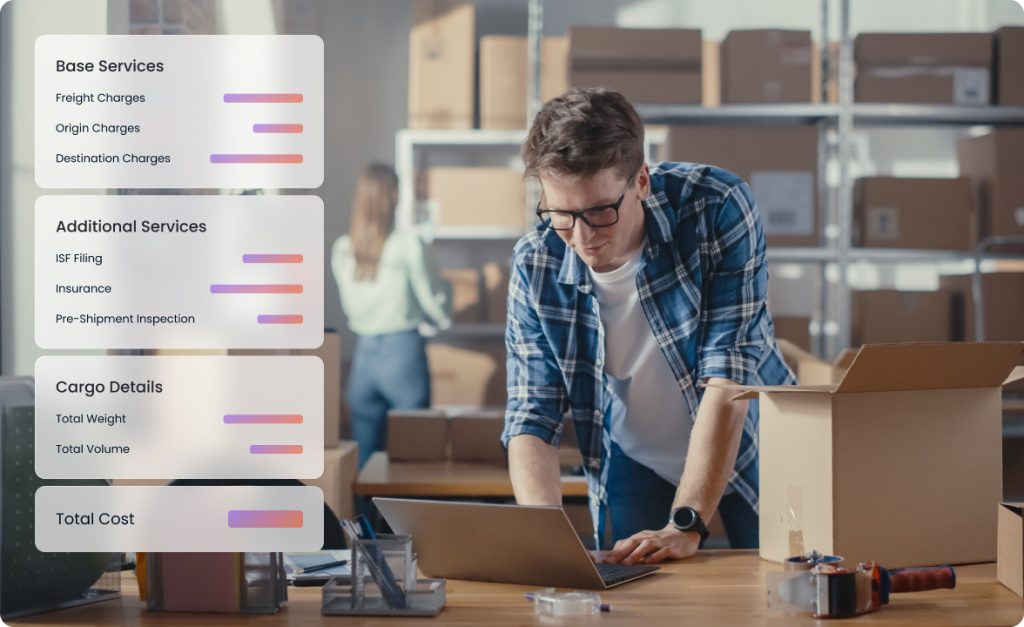
When Importing Without a Freight Forwarder Fails
Complexity, documentation errors, and unfamiliar regulations are where going it alone breaks down. The failures are not random. They concentrate in predictable places.
Customs Clearance Failures and Cargo Detention
One wrong tariff code can trigger a customs examination that holds your cargo while you scramble to fix things from the other side of the world. Detention at a port facility is not just inconvenient. Demurrage and storage fees accumulate daily, and for a container sitting at Felixstowe or Long Beach, you can be looking at hundreds of pounds or dollars per day within a week. Add potential fines for incorrect declarations and the cost of getting a specialist in to resolve the situation, and the savings you were chasing disappear fast.
Difficulty Coordinating Multiple Parties
An international shipment involves your overseas supplier, the origin port, a carrier, a destination port, a customs authority, a haulier, and your receiving warehouse. Each party has different communication preferences, different systems, and different timelines. Managing all of them without a central coordinator who has existing relationships with each means any breakdown in communication is yours to resolve. When a haulier misses a collection window or a port agent needs a document you did not know was required, the problem does not wait for you to figure it out.
Lack of Specialist Product Knowledge
Food, electronics, hazardous materials, plants, cosmetics, and medical devices all carry specific import controls. Misclassifying a product or missing a required certificate can mean your shipment is refused at the destination port or destroyed by customs. A forwarder who regularly handles your product category knows what is required before the goods move. Without that knowledge, you are relying on doing your own research accurately and completely every time, for every destination, across changing regulatory environments.
Unexpected Costs and Storage Fees
Without a forwarder’s volume contracts, you pay spot rates, which are often significantly higher than the rates a forwarder with regular volume on the same lane can access. Beyond freight costs, missing a preferential tariff rate under a free trade agreement because you did not know it applied, or because you submitted the wrong documentation to claim it, means your buyer or you pay more in duties than you should have. These are not rare edge cases. They are common outcomes for importers who underestimate how much specialist knowledge goes into a routine shipment.
Key Legal and Compliance Requirements for Importing Alone
If you decide to go without a forwarder, these are the areas where you cannot afford to cut corners.
EORI Numbers and HS Code Classification
An Economic Operators Registration and Identification number is required for any business importing goods into the UK or EU. Without one, your goods cannot clear customs. Getting an EORI is straightforward; it is the minimum threshold, not the hard part.
HS code classification is the hard part. The Harmonized System code you assign to your goods determines the duty rate, the regulatory requirements, and whether any trade restrictions apply. A misclassification can result in your buyer paying the wrong duty rate, your goods being pulled for inspection, or a formal penalty if customs determines the error was not accidental. The right approach is to use official tariff databases, the UK Global Tariff for UK imports, the HTS database for US imports, and TARIC for EU imports, and to seek a binding tariff ruling from the relevant customs authority if your product does not fit cleanly into a single category.
Documentation Requirements
Every commercial import needs at minimum a commercial invoice, a packing list, and a transport document. The commercial invoice must include accurate descriptions of the goods, HS codes, declared values, country of origin, and the Incoterms governing the sale. Customs authorities cross-reference documents against each other, and discrepancies between the invoice and packing list, or between the invoice and the Bill of Lading, will get flagged. Common errors include inconsistent product descriptions, values stated in the wrong currency, and party addresses that do not match the booking.
Customs House Agent vs Freight Forwarder
Even if you manage the logistics yourself, most importers still need a licensed Customs House Agent to file customs entries on their behalf. These are not the same role. A freight forwarder coordinates the full logistics chain, including documentation and customs, but a CHA is specifically licensed to submit declarations to the customs authority. Some freight forwarders include customs brokerage as part of their service. Others do not. If you remove the forwarder from the equation, you still need someone with the right credentials to handle the customs filing unless you are licensed to do it yourself. Skipping this step is where importers run into the most serious compliance problems.
Freight Forwarders vs Couriers: Which Do You Need?
For many small businesses, the choice is not between a forwarder and going it alone. It is between a forwarder and an international courier, and the right answer depends on what you are shipping and how.
International couriers handle door-to-door delivery including customs clearance for small shipments. They are fast, the process is simple, and for parcels or small consignments, the all-in cost is often comparable to or cheaper than freight plus forwarder fees. The limitation is size: couriers are designed for low-weight, relatively low-volume goods. Once your shipment gets heavier or bulkier, courier rates become uncompetitive and the service is not designed for the complexity of commercial cargo.
Freight forwarders handle shipments of any size, multi-modal transport, trade finance documentation, specialist product requirements, and anything involving regulated goods or complex customs requirements. They are necessary when you are moving LCL or FCL ocean freight, air freight at commercial volumes, temperature-controlled cargo, hazardous materials, or goods requiring specialised handling or documentation.
The rule of thumb is straightforward. If it fits in a box and weighs under 70kg per piece, a courier can probably handle it. If it fills a pallet or more, or involves any complexity beyond standard commercial goods to a straightforward destination, you need a forwarder or the internal equivalent.
When Should You Use a Freight Forwarder?
The decision comes down to two things: your shipment’s complexity and your team’s real capability to handle what a forwarder would otherwise own.
Use a forwarder when your shipment involves multiple modes of transport, regulated or specialised goods, new markets you have not shipped to before, or time pressure that leaves no margin for documentation errors. Use one when your internal team does not have current, hands-on experience with the specific requirements of your route and product. Use one when the cost of getting it wrong, in demurrage, duties, fines, or a delayed delivery, exceeds the forwarder’s fee by a factor you are not comfortable absorbing.
For UK businesses, the post-Brexit environment has raised the baseline complexity of every import from EU origins. Rules of origin requirements, full customs declarations, and additional checks at the border have added documentation obligations that did not exist before 2021. Businesses that previously moved goods from Europe without customs involvement are now operating in a regime that looks much more like importing from any other third country. The margin for error on those shipments is lower than it was.
Ship4wd is built for SMBs that want access to professional freight forwarding without the overhead of managing a fragmented network of providers. You get instant quotes, direct booking across FCL, LCL, and air freight, and 24/7 access to freight professionals who can answer the specific questions your shipment needs answered before it moves, not after something goes wrong. If you are weighing whether to manage imports yourself or work with a platform that handles the complexity for you, the starting point is a quote and a conversation about your route.
Frequently Asked Questions
Yes. There is no legal requirement to use a freight forwarder for commercial imports in the UK, US, or EU. You take on full responsibility for transportation coordination, documentation, and customs compliance when you do. Many businesses find the operational and regulatory demands of managing this correctly are harder than they expected.
The main risk is documentation and customs errors. One incorrect HS code, a missing certificate, or a discrepancy between documents can trigger a customs hold, demurrage fees, and potential penalties. The cost of those consequences routinely exceeds the forwarder fees the business was trying to avoid.
In most cases, yes. A licensed Customs House Agent or customs broker is needed to file customs declarations on your behalf unless your business holds the relevant credentials directly. Removing a freight forwarder from your process does not remove the customs filing requirement.
It makes sense when your shipment is simple and your team genuinely has the expertise to manage it. The clearest cases are small parcel shipments handled by international couriers, high-volume FCL routes with direct carrier contracts backed by an experienced in-house team, or DDP shipments where your supplier manages delivery and customs.
Since January 2021, UK imports from EU origins require full customs declarations, rules of origin documentation, and go through customs checks that did not previously apply. Businesses that previously imported from Europe without engaging customs processes now operate under the same regime as importing from any other third country. This has raised the baseline complexity and documentation requirements for those routes significantly.